Wednesday, July 27, 2011

Levon Helm -– Ramble at the Ryman


LEVON HELM
Ramble at the Ryman
Vanguard

Most Saturday nights, Levon Helm puts on a show called the Midnight Ramble at his studio in Woodstock, New York. His band plays and they feature a guest or two. Tickets cost $150.00 and typically sell out. I’ve never been, but I’ve heard from several people who have that it’s worth every penny.

Occasionally, Levon takes the show on the road. He’ll be here to close out the Ottawa Folk Festival on August 28. Ramble at the Ryman captures the legendary singer and drummer from The Band, along with his band, and several guests in a 2008 Ramble show at the Ryman Auditorium in Nashville, one of the most legendary music halls south of New York City.

It’s an eclectic blend of Americana music that Levon and his associates play. There’s lots of New Orleans in the mix – particularly in the second line horn arrangements. There’s also Memphis R&B, Appalachian folk and old-time country, blues, bluegrass, and, to be sure, rock ‘n’ roll. Levon, a survivor of throat cancer, does some of the singing, but, a lot of the vocals are handled by band members and guest artists.

Six of the 15 tracks are drawn from Robbie Robertson’s Band songbook and it’s obvious, three-and-a-half decades after The Last Waltz, Levon still finds a lot of joy and opportunities for creative expression in the songs. The album opens with “Ophelia,” with its celebratory, second line horns-meets-The Band arrangement. Along the way, Levon revisits the Cajun-flavoured “Evangeline,” sung as a duet with Sheryl Crow – their version holds up well next to the original version which featured Emmylou Harris singing with The Band – and “Rag Mama Rag,” done bayou-meets-Bourbon Street-style with some great trombone work by Clark Gayton. Later, the album closes with three Band songs as Levon and company breathe new life into “The Shape I’m In,” “Chest Fever” and “The Weight.”

Among the other highlights are a sweet version of the Carter Family’s “No Depression Heaven,” with lead vocal by Sheryl Crow, a bluegrass-meets-Dixeland-meets-rock ‘n’ roll arrangement of the traditional “Deep Elem Blues,” and a sweet country version of Buddy and Julie Miller’s “Wide River to Cross” with guests Buddy Miller on guitar and vocals and Sam Bush on mandolin.

It all whets the appetite for the Ottawa Folk Festival show.

--Mike Regenstreif

Sunday, July 24, 2011

Bill Morrissey 1951-2011

Bill Morrissey performing in 2010.
I woke up this morning to the very sad news that Bill Morrissey, one of the finest singer-songwriters of my generation (and a marvellous interpreter of Mississippi John Hurt songs), passed away yesterday.

I don’t know any details – apparently he was on a stopover in Georgia on his way north after some tour dates – but Bill has been in fragile health for a number of years. Bill did not look at all well when I last saw him in 2005 when he was in Montreal to perform for the Wintergreen Concert Series, but I’d heard he was recently feeling better; that he was overcoming alcoholism and depression, and Internet reports had him sounding good at recent concerts.

(Addendum, July 26, 2011: Autopsy results indicate Bill died from complications of heart disease.)

Mike Regenstreif & Bill Morrissey in 2005.
I’ve been a great admirer of Bill’s music since the LP version of his first album, Bill Morrissey, came out in 1984 (he later re-recorded the album for the CD release). We first met at a folk festival around that time and I enjoyed talking with him whenever our paths crossed over the years. He was twice my guest on the Folk Roots/Folk Branches radio show and he was among the most-played artists over the run of the show. In 2002, I hosted a workshop called Short Stories That Rhyme with Bill, Ron Hynes and Cliff Eberhardt on the mainstage of the Ottawa Folk Festival.

Bill was also a very fine novelist. I loved Edson, his first novel published in 1996, about a musician in a New Hampshire mill town (not unlike the town depicted in his classic song, “Small Town on the River”). He'd completed a second novel, Imaginary Runner, that has not yet been published.

Life in New Hampshire, where Bill spent many years, was a theme that ran through many of his songs.

Bill’s novelist’s skills as a storyteller were reflected both in his songs and in the engaging way he talked on stage between songs.

Bill leaves behind a substantial body of superb work. While many of Bill’s songs were sad and serious, he also wrote some that were very funny and, today, I want to think that he’s somehow experiencing the heaven he once wrote about:

“And me, I couldn’t be happier
The service here is fine
They’ve got dinner ready at half-past nine
And I’m going steady with Patsy Cline
And just last night in a bar room
I bought Robert Johnson a beer
Yeah, I know, everybody’s always surprised to find him here

It’s a great life in heaven
It’s better than the Bible said
It’s a great life here in heaven
It’s a great life when you’re dead.”  --Bill Morrissey, “Letter from Heaven”

--Mike Regenstreif

Monday, July 11, 2011

Get well, Jesse Winchester!

My thoughts and best wishes are with my friend of 40+ years Jesse Winchester as he battles cancer of the esophagus.

Jesse has cancelled his concert schedule while he undergoes treatment for the rest of the year.

Jesse is one of the great singer-songwriters of our time and there was a significant period of time when we on the Montreal folk scene had him almost to ourselves.

Three quick anecdotes:

Jesse played often at the Golem, the Montreal folk club I ran in the 1970s and ‘80s. I took over the club at the end of May 1974 and Jesse’s first gig there was at the beginning of August. This was right about the time that his third LP, Learn to Love It, came out and all three nights were sold-out. Jesse, in those days, was not able to perform in the U.S. but was already attracting a lot of attention for his songwriting. A reporter from Rolling Stone magazine showed up and covered the gig as part of a story about Jesse. I believe it was the first time that Rolling Stone had ever covered a Montreal story.

In November 1975, I was a backstage guest of Ramblin’ Jack Elliott (another Golem performer) at the Rolling Thunder Revue's first Toronto concert. During the concert, Joan Baez dedicated a song to Jesse (Dave Loggins’ “Please Come to Boston” which has a line, “I’m the number one fan of the man from Tennessee”). I met Joan for the first time at the Rolling Thunder party after the show. When I mentioned that Jesse was a friend, Joan spent about half an hour grilling me about him.

In 1999, when Jesse released his first new album in 10 years, I was honoured that he chose to debut the album as a guest on the Folk Roots/Folk Branches radio show.

I know that I speak for all his friends and fans in wishing Jesse a speedy recovery.

--Mike Regenstreif

Wednesday, July 6, 2011

Carolina Chocolate Drops on their way to Montreal


The Carolina Chocolate Drops, one of the most exciting string bands to emerge in many years, will be performing their first Montreal concert Thursday, July 14, 8:00 pm, at Petit Campus (57 Prince Arthur East).

For info or tickets, call Hello Darlin' Productions at 514-524-9225.

Since forming six or seven years ago, the Carolina Chocolate Drops have been at the forefront of the revival and revitalization of African American stringband music, a rich form of traditional music that had been largely forgotten in recent decades.

I’ve seen the Carolina Chocolate Drops several times at folk festivals and have loved their unique blend of traditional music with contemporary sensibilities – both on stage and on their series of excellent CDs. Their latest full length CD, Genuine Negro Jig, won the Grammy this year for Best Traditional Folk Album.

The Carolina Chocolate Drops are coming to Montreal with a revised line-up from the version of the band that I know from CDs and folk festivals. That version was a trio featuring Rhiannon Giddens, Dom Flemons and Justin Robinson.

Justin recently left the band and original members Rhiannon and Dom have been joined by human beatboxer Adam Matta and multi-instrumentalist Hubby Jenkins. The buzz I’ve heard indicates version 2.0 of the Carolina Chocolate Drops is every bit as exciting as the original trio.

By the way, the band name, Carolina Chocolate Drops, is a nod to the Tennessee Chocolate Drops, an African American stringband that played and recorded in the 1930s. I had the opportunity to get to know three of the Tennessee Chocolate Drops – Carl Martin, Ted Bogan and Howard "Louie Bluie" Armstrong, all of whom have since passed away – when they reformed as Martin, Bogan and Armstrong in the 1970s.

Here’s my Montreal Gazette review of the first Carolina Chocolate Drops album from June 21, 2007.

CAROLINA CHOCOLATE DROPS
Dona Got A Ramblin’ Mind
Music Maker

There’s been a strong revival of old-time music over the past several years and one of the most exciting groups to emerge is the Carolina Chocolate Drops. This trio of young African American musicians takes much of their inspiration from the almost-forgotten traditions of black fiddle and banjo-based music from the Piedmont region of the American Southeast. Their very impressive debut CD is highlighted by highly rhythmic instrumental work on string band tunes like “Rickett’s Hornpipe” and “Old Cat Died,” and by convincing singing on a couple of murder ballads: “Little Sadie” and “Tom Dula.” The finest vocal performances come in their vivid a cappella versions of the prison song “Another Man Done Gone,” and the ancient ballad “Little Margaret.”

--Mike Regenstreif

Wednesday, June 29, 2011

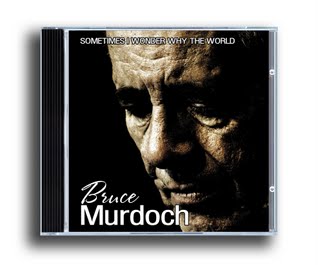
Bruce Murdoch -- Sometimes I Wonder Why the World

BRUCE MURDOCH
Sometimes I Wonder Why the World
Bruce Murdoch

A little history: I’ve known Bruce Murdoch for a very long time – more than 40 years. His music – I’ve always thought he was a great singer and songwriter – and his friendship, have both been very important to me over the years.

I was just 15 or 16, early in my involvement in the Montreal folk scene, circa 1969 or ’70, when I first met him. Bruce, who would still only have been 21 or 22 then, was back in town after five years or so of making an important mark on the U.S. folk world.

In 1965, at 17 (as Janis Ian would say), Bruce was one of four then-unknown artists – Richard Fariña, Patrick Sky and David Cohen (later David Blue) were the others – who made their debuts on The Singer-Songwriter Project LP. He later recorded 33 1/3 Revolutions per Minute, a full-length LP with producer Richie Havens whose great songs were marred by some bad production. He played major clubs, concert halls and folk festivals, and toured in support of Senator Eugene McCarthy’s failed bid for the U.S. presidency on a peace platform.

I was instantly captivated when I began to hear Bruce play at places like the Back Door, the Yellow Door and the Montreal Folk Workshop. When I started my first concert series at Dawson College in 1972, Bruce was the first artist I invited to play. Then, in 1974, when I took over the Golem Coffee House, Bruce was the first artist I invited to play there, too.

By the end of the 1970s, after recording one final LP, the self-titled Bruce Murdoch, and for reasons that I fully understood, Bruce was done with the music scene. He needed to get away from it, to go somewhere where he had no history and start over. So he moved out west, went back to school, and became a high school teacher in small town Alberta. His Martin D-28 sat unplayed in its case for 25 years,

I always hoped that, when he was ready, Bruce would come back to singing and songwriting – on his own terms. I asked him a couple of times in the 1980s to see if he was ready to come back to Montreal and play the Golem again. He wasn’t and I understood.

I spoke to him again, probably in 1994, after I started the Folk Roots/Folk Branches radio show on CKUT and told him there was a guest spot for him on the show as soon as he was ready to make music again. Ten or 11 years later, Bruce let me know that the guitar was starting to come out of the case again, that songs were starting to come again. Bruce promised that as soon as he was ready, mine would be the first radio show he’d play his songs on. As fate would have it, he made it just under the wire. He was on Folk Roots/Folk Branches with me on July 26, 2007, just five weeks before I signed off the radio show after a run of almost 14 years.

Bruce’s new songs were different than the ones he was writing in the 1960s and ‘70s. They were generally more personal and less obviously political, but, they were every bit as compelling. In 2008, Bruce released a great album, Matters of the Heart; it was great to have him back as a recording and performing artist. I loved the album, I’ve loved the concerts I’ve seen Bruce do, and it’s been a personal treat to spend bits of time with him again.

A couple of years ago, Bruce came home to Quebec and has been living and writing in Ormstown, a town about 45 minutes south of Montreal that has a folk scene way out of proportion to its small size. Working there, Bruce wrote the songs he’s recorded, with a little help from some great musical friends, on his new album, Sometimes I Wonder Why the World.

The songs on the new album are intimate and intense and reveal more every time I listen to them. I often find I lose myself in Bruce’s words and melodies. Listening to them consecutively, one song seems to flow into the next like 13 movements in a suite. Mature love and human courage are the dominant themes.

While I could easily shout the praises of almost every track on the album, I’ll call attention to a few of the most special songs.


Bruce sings “The Rookie” from the perspective of the veteran volunteer firefighter that he was in Hinton, Alberta giving some advice to new, younger colleague. It’s an inspiring song about ordinary, everyday people who summon the inner strength needed to do extraordinary deeds under trying, difficult circumstances. While the song may have been specifically inspired by volunteer firefighters, it’s also a metaphorical song about anyone from any walk of life who rises to the occasion when necessary.

Every time I listen to the intense, eight-minute opus “In the Simplest of Ways” I’m tempted to reinterpret the impressionistic lyrics in a new way. What I most lean toward, though, is Bruce thinking about his return to expressing himself in song again after so many years of silence from that creative side of his being.

“I Intend to be the Last Man Standing” is a love song born of separation. Perhaps, but not necessarily a song for a lover; it could also be a song of separation of friend from friend or of  parent from child.

“I’m at the Mercy of Your Smile” is a love a song of the moment, a declaration to the object of the narrator’s deep affection in the here and now. There are actually two versions of the song on the album, Bruce’s English-language original and a French-language version translated by Pierre Lachance, “Je suis envoûtée par ton sourire,” five tracks later sung by Caroline Allatt whose harmonies grace the first version.

Writing on a different night, I might just as well have picked four different songs to highlight.

In addition to Bruce’s lead vocals and rhythm guitar, there are fine contributions from a variety of other musicians including guitarists Bill Garrett, Ron Bankley, Luc Larocque, David Valentine Taylor and David Whyte; violinist Chris Crilly; and bassist Eric Bernard.

New songs from Bruce Murdoch are always to be treasured.

Pictured: Mike Regenstreif and Bruce Murdoch (wearing a Hinton Fire Department T-shirt) at the 2007 Branches & Roots Festival.

--Mike Regenstreif

Saturday, June 25, 2011

Coen Brothers to do film about Dave Van Ronk?

According to this Los Angeles Times blog, the Coen BrothersJoel and Ethan – are working on a film script loosely based on the life of Dave Van Ronk

(Thanks to Mary Katherine Aldin for the blog link.)

According to the report, Dave’s posthumous book, The Mayor of MacDougal Street, written with Elijah Wald, is being used by the Coen Brothers as source material. That’s pretty cool. The last time Dave was in Montreal – in 1998 to perform at the jazz festival – he did a long interview with me on the Folk Roots/Folk Branches radio show that was one of the many sources Elijah drew on when putting the book together.

I first met Dave sometime around 1970 when he played at the short-lived Back Door Coffee House in Montreal. He was gracious then in answering all the questions that the teenaged me could throw at him. He also pointed me in some interesting directions in music to listen to.

Our friendship actually developed later in the mid-to-late-1970s when I was spending a few days at a time a couple of times per year in New York City and got to hang out with Dave in the Village and spend a few late nights and early mornings getting an education at the University-of-Dave Van Ronk’s Couch. Have a listen to Tom Russell’s piece, “Van Ronk,” on Hotwalker or The Tom Russell Anthology: Veterans Day, for an appreciation of what it meant to spend a night on Dave’s couch.

In the 1980s, Dave came up to Montreal several times to play at the Golem, the folk club I was running, and he would stay at the little apartment I had on Kensington Avenue. We’d sit up there too, arguing politics, and talking about music, and listening to music. Once, he made me play a particular solo from a Lester Young LP that I had over and over again.

Time spent with Dave Van Ronk taught me how to really listen to music. I mean really listen to music. (I should also say I learned a lot in that regard from David Amram and Rosalie Sorrels.)

The Mayor of MacDougal Street remains one of the best books I’ve read about the 1960s folk scene (and I’ve read a lot of them). And Dave’s many albums remain essential listening for me.

He was a friend of mine.

--Mike Regenstreif

Thursday, June 23, 2011

Review: Festival Folk sur le canal

I spent much of last weekend having a fine old time at the fourth annual Festival Folk sur le canal at the Terrasse St-Ambroise on the grounds of the McAuslan Brewery on the Lachine Canal in Montreal. Congratulations to my friends Matt Large and Rebecca Anderson of Hello Darlin’Productions and Carl Comeau of Hyperbole Music for putting together another fine event.

For the first time this year, the festival added off-site Thursday and Friday events including a sold-out opening gala with the legendary John Sebastian on Thursday, June 16 at the Georges Vanier Cultural Centre. John’s been a favourite performer of mine since the 1960s, so I was disappointed that I was in Ottawa that night and couldn’t make it (the last time I saw John was in the late-1990s). I did hear from several people who were there that it was a great night.

On Friday afternoon and evening the festival moved onto the canal at Îlot Charlevoix for a free concert and folk jam. Again, I wasn’t there, but everything I heard about the event was very positive.

As noted, I was around for much of the Saturday and Sunday action at the Terrasse St-Ambroise – including a Sunday afternoon shift as the festival MC. Among my personal highlights were sets by several artists I’d never seen before including the Wildwood Flowers, an exciting, mostly-female, francophone band steeped in the traditional country music of the Carter Family; Emm Gryner, a piano-based singer-songwriter with strong original material but who slew me with a stunning version of “Tell My Sister,” a song written by my late friend Kate McGarrigle; Cécile Doo-Kingué, a singer-songwriter and excellent guitarist strongly influenced by African folk music; and Canailles, a wild, punky francophone band that drew on zydeco, bluegrass and blues influences.

Among the artists I’ve heard before that I also quite enjoyed were Rose Cousins, who is quickly becoming one of Canada’s most accomplished singer-songwriters, Cajun band Grouyan Gombo, and road warrior Fred Eaglesmith and his band.

I was sorry that I couldn’t stick around to hear the festival closing sets by the delightful old-time, neo-vaudeville duo Sheesham and Lotus and the great singer- songwriter David Francey.

The perfect weather on Saturday and Sunday helped make Festival Folk sur le canal a great kick-off to summer folk festival season.

--Mike Regenstreif

Tuesday, June 21, 2011

35 Years of Stony Plain

VARIOUS ARTISTS
35 Years of Stony Plain
Stony Plain

More than 35 years ago, I was friendly with Humphrey & the Dumptrucks, a terrific quartet, then trio, from Saskatoon that played an infectious blend of folk, country, bluegrass and jug band music. One of their LPs, Gopher Suite, was recorded at a coffeehouse in Edmonton by a friend of theirs named Holger Peterson. Holger, they told me, was a radio host in Alberta who was completely motivated by his love of music.

A year or two later, Holger, and partner Alvin Jahns, founded Stony Plain Records, a company they eventually developed into one of roots music’s pre-eminent record labels. They’ve released more than 400 albums by some of the greatest artists – including several certified legends – straddling the blues, folk, country and jazz fields, all the while maintaining a vision that remains completely motivated by Holger’s love of music.

In 1991, Stony Plain celebrated its 15th anniversary with a 2-CD set compiled from its releases to date, and they’ve followed up with a 2-CD compilation every five years since and are now celebrating their 35th anniversary with this 2-CD, 1-DVD compilation chock filled with lots of great music.

The first CD in the set is subtitled Singers, songwriters and much, much more... It’s a delight from Maria Muldaur’s opening track through contributions from the likes of Jeff Healey playing classic jazz, Asleep at the Wheel playing western swing, to great songwriters like Steve Earle, Corb Lund, Rodney Crowell and Ian Tyson (who I personally consider to be the greatest Canadian songwriter of all). Other highlights include a Flying Burrito Brothers classic sung by Emmylou Harris, and a swinging Charlie Christian guitar instrumental sublimely played by the New Guitar Summit (Jay Geils, Duke Robillard and Gerry Beaudoin). Duke’s guitar also swings on “Strictly from Dixie,” a great track by Sunny & Her Joy Boys, a band that also features my old pal Billy Novick on sax and clarinet. And Amos Garrett is there with the title track from Get Way Back, his great tribute album to Percy Mayfield.

The first CD finishes with three previously unreleased demo tracks by the late Bob Carpenter, a fine singer-songwriter who died 15 years ago after only releasing one album in his lifetime.

The second CD is subtitled Blues, R&B, swing, jazz and even more... It’s also a delight highlighted by tracks from the late, legendary Kansas City bandleader Jay McShann, Duke Robillard, Jeff Healey (in blues-rock mode), Rosco Gordon, Rory Block, Long John Baldry, and a kind of supergroup trio of Amos Garrett, Doug Sahm and Gene Taylor.

Many of the albums from which the tracks on these two CDs were drawn remain favourites in my collection and many of these artists were staples of the programming I did on the Folk Roots/Folk Branches radio show from 1994 to 2007. And many of these artists – including Ian Tyson, Jay McShann, Rory Block, Harry Manx, Duke Robillard and Ray Bonneville – were guests on the show.

The bonus DVD includes a conversation with Holger and Alvin in the Stony Plain offices and 10 videos, some of them classic, featuring Stony Plain artists.

Congratulations to Stony Plain on 35 years of uncompromising commitment to great music.

--Mike Regenstreif

Thursday, June 16, 2011

Ray Charles -- Live in Concert


RAY CHARLES
Ray Charles Live in Concert
Concord

I saw Ray Charles live four or five times, mostly in concert halls like Place des Arts in Montreal. The shows were great – like, how could a Ray Charles show not be great? – but, they had settled into a kind of greatest hits routine formula in the last couple of decades of his touring career. But, what a formula it was. Charles’ genius lay in his organically combining so many different styles at the roots of American music – gospel, blues, jazz, R&B, country, even traditional folk music – into his singular, soulful style.

The first Ray Charles show I ever saw was, to my memory, the best and the most unusual. Unusual, to me, at least, in its setting in a huge hotel ballroom with the audience of thousands seated 10 or so to a table. It was New Year’s Eve in Miami Beach as 1976 gave way to 1977. My friend Paul Levine and I had driven down to Florida from Montreal on a whim for a winter vacation and were happy to find something we were excited to do on New Year’s Eve. The table service was weird. You couldn’t order a single drink at your table; only full bottles of expensive liquor. I’d never seen anything like that before, or since. It was a loud, obnoxious place filled with a loud, obnoxious crowd. But, when Ray Charles and his orchestra came on, he commanded the place and blew the roof off.

Listening to the expanded (19 tracks, the original LP was 12) reissue of Ray Charles Live In Concert, recorded in 1964, I’m hearing a show that reminds me much more of that Miami Beach show from a dozen years later, than the 1980s and ‘90s performances I saw at Place des Arts.

The recorded concert is a big band affair with Ray at the piano (and, occasionally, organ) with fabulous rhythm and horn sections, and the Raylettes, who add their gospel-infused, call-and-response vocal harmonies to a few songs.

The program ranges from swinging jazz instrumentals like “One Mint Julep,” to R&B classics like “What’d I Say,” to reimagined country songs like “You Don’t Know Me,” and humorous vaudeville tunes like “Two Ton Tessie.”

Among my very favorite tracks are Charles’ versions of “In the Evening (When the Sun Goes Down)” adapted from Lead Belly’s adaptation of Leroy Carr’s original from the 1920s; a lovely version of “That Lucky Old Sun”; and a stunning seven-minute performance of Hoagy Carmichael’s “Georgia On My Mind,” in which Charles’ organ beautifully replaces the orchestral strings from his studio recording.

I’m glad I got to see Ray Charles live on several occasions and I’m very happy to be able to relive the experience via this CD.

--Mike Regenstreif

Wednesday, June 15, 2011

Rob Lutes & Rob MacDonald -- Live

ROB LUTES & ROB MacDONALD
Live
R. Lutes & R. MacDonald

Over the course of four albums in 11 years, Montreal-based singer, songwriter and guitarist Rob Lutes has been steadily building a well-deserved reputation for his well-crafted songs, which often deal with difficult subjects, and entertaining live performances featuring his gritty voice and fluid blues-based guitar playing. Resophonic guitarist Rob MacDonald has played on most of Lutes’ recordings and has been his frequent on-stage collaborator since the time of the first album. On this intimate live album, the two Robs revisit 10 of Lutes’ original songs drawn from three of the earlier albums.

Among the highlights are “Uptight,” a commentary on the destructiveness of arguments that can escalate from something trivial or pointless, and “Keep a Man Down,” an angry song about a disintegrating relationship. The effects of too much alcohol on the lives of Lutes’ characters can be felt in both of those songs. Another is “Cold Canadian Road,” in which the protagonist seems determined not to let the relationship get to the disintegration of “Keep a Man Down.”


In addition to Lutes’ own songs, the Robs also offer four covers, including fine versions of “Ain’t Nobody’s Business,” which seems like it’s based on Eric Von Schmidt’s “Champagne Don't Hurt Me, Baby,” and Sleepy John Estes’ “Drop Down Baby” (which is more frequently performed as “Drop Down Mama”). Both of those songs show Lutes and MacDonald’s facility and skills with traditional country blues styles.

It’s been about three years since Lutes’ most recent set of new material. I’m looking forward to hearing more before too long.

Pictured: Mike Regenstreif introduces Rob Lutes (right) and Rob MacDonald at the 2008 Festival Folk sur le canal.

--Mike Regenstreif

Sunday, June 12, 2011

David Francey -- Late Edition

DAVID FRANCEY
Late Edition
Laker Music

As I’ve written previously, in this and other spaces, David Francey didn’t begin his career as a performing or recording artist until he was well into middle age (click here for a feature article I wrote about David in 2005). However, over the past dozen years, this plain-spoken Scottish-Canadian artist has firmly established himself as one of the most engaging and poetic singer-songwriters of our time. And, while he didn’t release his first album until 1999, he’s been prolific ever since. Late Edition is his ninth album – including a live CD and a Christmas set – and it maintains the high level of songwriting craftsmanship that David set on his first recording and which he’s maintained since.

In 2005, David went to Nashville and recorded The Waking Hour in off-the-floor sessions with top flight studio musicians assembled by producer Kieran Kane. This album reunites David and Kieran, along with multi-instrumentalist Fats Kaplin, who also played on The Waking Hour, guitarist Richard Bennett and drummer Lucas Kane. Again, the album was recorded in off-the-floor sessions with David singing while the musicians played. It’s a recording process that is great when it works – and it certainly does on these 12 songs (including one that’s an a cappella solo).

David notes that many of the songs on Late Edition were written in response to news – personal news, local news or world news. I would add that a couple would seem to be about how the media covers news. These songs would include “Yesterday’s News,” a commentary on the ephemeral nature of what we consider to be news, and “Pretty Jackals,” a metaphorical analysis of how television, in particular, exploits the news.

As is typical of almost any David Francey album, the highlights include several songs that deal with various aspects of love and relationships. In “Wonder,” he reflects on what might have been with an old love that didn’t work out, while in “Grateful,” he celebrates a long-term love that did.

Kieran and the other Nashville musicians adapt well to David’s personal, folk-rooted, style of songwriting. And, in “I Live in Fear,” co-written with Kieran, they bring out his heretofore hidden rock ‘n’ roll side.

For folks in Montreal – or who will be in Montreal next week – David will closing out the Festival Folk sur le canal on Sunday, June 19. (By the way, I'll be MCing at the festival in the mid-afternoon on Sunday.)

--Mike Regenstreif

Tuesday, June 7, 2011

Ottawa Folk Festival line-up announced

The line-up for the first OttawaFolk Festival put together by Bluesfest director Mark Monahan has been announced. Looking at the schedule, which stretches across four days from Thursday, August 25 to Sunday, August 28, it kind of looks more like a Bluesfest schedule than a traditional folk festival with artists booked to do lengthy concert sets on multiple stages Thursday and Friday evenings and all day and evening on Saturday and Sunday.

As I’ve mentioned before, I’m of the opinion that folk festival workshops are the heart and soul of the folk festival experience. The Ottawa Folk Festival workshops are being curated by Arthur McGregor of the Ottawa Folk Festival and will be announced in the coming weeks. The schedule grid shows two workshop stages to be filled in. I'm really looking forward to seeing how the workshop schedule falls into place.

The full list of artists and the concert schedule can be found on the Ottawa Folk Festival website, but some of the artists I’m most looking forward to seeing include the Levon Helm Band (I’ll be posting a review of Levon’s great new live album, Ramble at the Ryman, in the next week or so); Hayes Carll, a very fine singer-songwriter from Texas; Justin Townes Earle, the son of Steve Earle (who will also be at the festival), who has released three excellent albums over the past few years (my review of his latest, Harlem River Blues, is at this link); and Vance Gilbert, a terrific singer and very sophisticated songwriter.

Local favourites on the schedule include Lynn Miles (my review of Lynn’s latest, Fall for Beauty, is at this link) and Lynne Hanson.

Among the artists I’ve never seen before that I want to see are the David Wax Musuem, a kind of folk-rock-Mexican-roots band from Boston; Peter Himmelman, an interesting songwriter; and Jayme Stone, an explorer of the five-string banjo.

I’ve heard good things about the new festival site at Hog’s Back Park so I’m looking forward to hearing some good music there.

I do have some reservations about the line-up. There aren’t many artists on the list who play much traditional music, or even traditionally-oriented music. There should always be lots of room for real folk music at a folk festival.

--Mike Regenstreif

Sunday, May 29, 2011

"Phil Ochs : There But For Fortune" is coming to Ottawa

The Ottawa Folk Festival has announced they’ll be presenting a screening of the acclaimed documentary, Phil Ochs: There But For Fortune, on Tuesday, June 14, 7:00 pm, at the Mayfair Theatre (1074 Bank Street)

I’ve been looking forward to an opportunity to see this film about Phil Ochs, one of the greatest topical singer-songwriters of the 1960s since it first began screening at film festivals and art house cinemas in January. Reviews and word-of-mouth from people I know who have seen it have been totally positive.

Mike Regenstreif and Sonny Ochs  at the 2009 Ottawa Folk Festival.
There will be an after-party down the street at Patty’s Pub (1186 Bank Street) after the screening featuring a sing-along of Phil Ochs songs led by Arthur McGregor and a question-and-answer session with the always-wonderful Sonny Ochs, Phil’s sister, and the person I think is most responsible for ensuring Phil’s songs – and his memory – have remained central to the folk music scene over the past 35 years. A ticket stub from the screening is needed to get into the party.

Advance tickets ($15) are available at the Ottawa Folklore Centre (1111 Bank Street).


--Mike Regenstreif

Saturday, May 21, 2011

Bob Dylan at 70

Photo: John Shearer (for Columbia Records)

Bob Dylan turns 70 on Tuesday (May 24) – 50 years and a few months after he first arrived in New York City with a repertoire of folksongs learned from Odetta and Woody Guthrie records.

Within a relatively short time, Dylan was one of the premier folk artists in Greenwich Village and was well on his way to becoming, arguably, but certainly in my opinion, the most important and influential songwriter ever.

I’m reminded now of something the young Dylan said.

In 1963, talking to Nat Hentoff for the liner notes to The Freewheelin’ Bob Dylan about his ability to pull off a song as difficult as “A Hard Rain’s A-Gonna Fall,” Dylan said, “It's a hard song to sing. I can sing it sometimes, but I ain't that good yet. I don't carry myself yet the way that Big Joe Williams, Woody Guthrie, Lead Belly and Lightnin' Hopkins have carried themselves. I hope to be able to someday, but they're older people.”

Dylan was all of 21 years old when he made that statement. Woody Guthrie – hospitalized with the Huntington’s disease that would kill him in 1967 – and Lightnin’ Hopkins were both then around 50. Big Joe Williams was about 60 and Lead Belly had died in 1949 at 61.

Dylan now is significantly older than Williams, Guthrie and Hopkins were then – and older than Lead Belly was when he died. The young Dylan was highly influenced by those legendary artists who had come along decades earlier – his own influence would soon surpass all others. He changed what was possible to do in the context of a song.

And, yes, he does carry himself with all of the musical gravitas that Williams, Guthrie, Lead Belly and Hopkins had then.

Dylan’s music has been part of my life for most of my life. I bought Dylan’s first few LPs in 1967 when I was 13 and have listened intently to everything he’s released over the past 50 years (and a fair bit of what’s never been released). I’ve seen him in concert a bunch of times and I’ve read most of the good books (including his own Chronicles Volume One), and maybe a few too many of the bad books, that have been written about Dylan over the years.

I was even introduced to him once – in 1975 – for about half a second. “Pleased to meet ya,” he said. I was 21, he was 34, more than half of both of our lifetimes ago.

I’ve written about a bunch of Dylan albums and books over the years in newspapers and magazines (and here on the Folk Roots/Folk Branches blog), I’ve produced and hosted a bunch of radio specials on him and his songs, but I don’t know Dylan. He is easily the most enigmatic, the most unknowable, person I’ve ever encountered.

As I noted in my book review of Bob Dylan in America by Sean Wilentz in the current issue of Sing Out! magazine, I’ve long thought that one of the reasons I so appreciate so much of Bob Dylan’s oeuvre is that (I think) we’ve listened to so much of the same music. To the traditional folk and blues songs, and to so many of the musicians who played them. When Dylan sang, “no one can sing the blues like Blind Willie McTell,” I knew what he was talking about because I’ve listened to all those old Blind Willie McTell records. When he borrows lines or settings from Woody Guthrie or Lead Belly or others, I know where they come from. Dylan’s music is rooted ever so strongly in what Greil Marcus termed the “old weird America,” the folk music and the folk-rooted blues and country music that developed in particular regional locations and began to spread everywhere in the first half of the 20th century.

This leads me to the point I wanted to make when I started writing this little essay. Even before Dylan went electric at the Newport Folk Festival in 1965, there have been commentators who’ve said that Dylan left folk music behind. I don’t think that’s at all true. To this day, Dylan’s songwriting continues to be rooted in the “old weird America.” Dylan didn’t leave folk music behind when he embraced rock ‘n’ roll, he changed what was possible in a folk music context; both in how it’s played and how it’s expressed. I hear folk music at the heart of so much of Dylan’s songwriting -- from his earliest work to his most recent.

And anyone who thinks that folk music is necessarily defined by acoustic guitars does not understand folk music.

When jazz musicians like Charlie Parker and Dizzy Gillespie developed bebop, they weren’t leaving jazz behind, they were changing it; even though some of the traditional jazz greats like Louis Armstrong were slow to accept or understand what Parker and Gillespie were doing. Just like some in the folk establishment of 1965 were slow to accept and understand what Dylan was doing. Bob Dylan changed folk music in much the same way Charlie Parker changed jazz.

As far as I’m concerned, Dylan playing his folk-rooted songs with rock musicians in his time is not very different from the Weavers playing folksongs with the Gordon Jenkins Orchestra in theirs. 

Anyway, real rock ‘n’ roll, is a folk-rooted form. Just listen to the Sun-era recordings of Elvis Presley, Johnny Cash or Jerry Lee Lewis. Listen to Wanda Jackson’s 1950s records, listen to Chuck Berry, Buddy Holly, Bill Haley or Little Richard. The folk and blues roots are there in that music.

By the way, Louis Armstrong was a folksinger, too.

Happy Birthday, Bob!

For folks in Montreal: Billy Bob Productions is hosting a Bob Dylan 70th birthday celebration on Tuesday night, 8:00 pm, at Petit Campus, 57 Prince Arthur East. Tickets are $5.00 at the door.

---Mike Regenstreif

Thursday, May 19, 2011

Various Artists -- A Nod to Bob 2


VARIOUS ARTISTS
A Nod to Bob 2
Red House

A decade ago, when Bob Dylan turned 60, Red House Records, the superb folk music label based in Dylan’s home state of Minnesota, released a sublime tribute album called A Nod to Bob, that featured Red House artists of the day – including Rosalie Sorrels, Greg Brown, Eliza Gilkyson, John Gorka, Ramblin’ Jack Elliott, Guy Davis, Lucy Kaplansky and others – each doing a Bob Dylan song.

Now, with Dylan turning 70 this coming Tuesday, Red House has released another fine tribute featuring 16 of its solo artists or bands – including seven who were on the first Nod to Bob in 2001 – each doing a Dylan song or, in the cases of Spider John Koerner (“The Days of Forty-Nine”), Hot Tuna (“Mama, Let me Lay It On You”) and Guy Davis (“House of the Rising Sun”), great versions of traditional songs from Dylan’s repertoire.

Among my favourite tracks are John Gorka’s beautiful version of “Just Like a Woman,’ a gorgeous take on “Buckets of Rain” by Danny Schmidt, Meg Hutchinson’s haunting piano-based arrangement of “Born in Time,” and Jimmy LaFave’s intense folk-to-rock version of “Not Dark Yet.” There’s probably no other current artist who understands Dylan’s fusion of folk music and rock ‘n’ roll intensity better than Jimmy LaFave.

I have to admit that I much preferred the songs that Lucy Kaplansky and Eliza Gilkyson chose for Nod 1 to the ones they chose for Nod 2, but, still Lucy’s version of “Every Grain of Sand,” and Eliza’s live version of “Jokerman,” are both first-rate. As are almost all of the rest of the tracks.

I would say that if you’re looking for the best-ever various artists tribute album to Dylan, my vote would probably go to 2001’s A Nod to Bob. If you’ve got that one and want a more-than-worthy sequel, A Nod to Bob 2 is highly recommended.

---Mike Regenstreif