Sunday, January 29, 2012

Leonard Cohen – Old Ideas

LEONARD COHEN
Old Ideas
Columbia

The songs of Leonard Cohen have been an important part of my life since 1968, when – like almost everyone in Montreal (or, at least, English-speaking Montreal) into music and/or poetry – I sat down with his newly-released first LP, Songs of Leonard Cohen, a masterwork of songwriting. I lost myself in Leonard’s voice, his music and his words on that album. Especially the words. I’ve been listening to those songs, over and over again, and to the songs on every album he’s released since, and I still find layers of meaning and new ways to interpret so many of them. A well-established man of letters, a poet and novelist, who was well into his 30s before recording that first album, Leonard has never been a simple singer-songwriter churning out ephemeral pop music.
 
Even the songs on Leonard’s minor albums like Death of a Ladies Man or the somewhat uneven Dear Heather have kept me enthralled. And I’ve stayed enthralled when listening, over and over again, to albums like I’m Your Man built around mechanical-sounding, programmed keyboards, an approach to music-making I generally loath and have no time for in the hands of almost anyone but Leonard Cohen.

Curiously, despite using variations on that programmed keyboard approach on much of his recorded work since 1988, his concert tours in that same period have featured ensembles of world-class musicians and harmony singers and impeccable arrangements.

This brings us to Old Ideas, the song-poet’s latest masterwork. Recorded in the wake of a two-year world tour, the sound of music played by real musicians – happily – outweighs the mechanical sound of programmed keyboards. It’s very intimate music-making. The arrangements, mostly, are quiet, and Leonard’s singing, mostly, is conversational; conversational and hypnotically mesmerizing.

I referred to the album as a masterwork and, indeed, it is. Like so much of his best work, there are layers and layers of meaning and understanding that I think will continue to reveal themselves over a period of years of repeated listening.

That’s already started to happen for me with several songs, perhaps most notably with “Amen,” a long, prayer-like song, perhaps a conversation with God. At first, when Leonard sings that he’s “been to the river” and then makes reference to the “Laws of Remorse,” I thought, perhaps, the song was inspired by the Tashlich ceremony of the Jewish New Year, when the sins of the past year are symbolically cast into the water. I still think that’s part of what the song is about. On second and third listening, though, piecing together the different images – “the horror,” “the victims,” the “night [that] has no right to begin,” “the filth of the butcher,” “the Eye of the Camp,” and several others – I now think the song’s major theme is a deep rumination on the Holocaust; perhaps an attempt to address the most difficult question of modern Jewish philosophy: how could God have allowed the Holocaust to occur?

Another song I’ve interpreted differently on subsequent playing is “Crazy to Love You,” which Leonard performs solo – just his voice and nylon-string guitar. On one level, it’s seemingly a song about craziness we go through – early in a relationship – in trying to mold ourselves into who we want the romantic object our desire to think we are. But, then, I thought maybe it’s about the craziness that performing artists – singers, actors, etc., even poets – go through in establishing the character or persona under which they perform.

Among my first favourites is “Banjo,” which seems to use an image of a broken banjo floating on the sea as a metaphor for something that is personal and important that has been lost. Maybe I’m over-interpreting here, but when the brass section comes in midway through the song with its echoes of a New Orleans second line march, I couldn’t help but think the broken banjo floating out there represents all the music-making that was lost to Hurricane Katrina.

Although much of Old Ideas ponders such major themes as love, human mortality and spirituality, it’s not an album bereft of humour. In the opening song, “Going Home,” Leonard sings about himself in the third-person. Is it his inner muse singing about his outer person, or, as Freud might have it, his super-ego singing about his ego and id? Or, is it just Leonard having some fun?

And speaking of humour, look at the album cover. Leonard, in his trademarked black suit and hat, sitting in a backyard in the sun. So much of his work suggests the hours of night, of darkness, but there he is, sitting in the sun.

I suppose one of the beauties of Leonard’s work is that it’s so open to interpretation. Every song on Old Ideas is layered with ideas – the ideas Leonard had when he wrote the songs, and maybe more that continued to grow; and certainly the ideas that each of us, individually, hears and develops from listening and endlessly re-listening to the songs. What I hear in these old ideas is not necessarily what anyone else hears, or, even, what the poet – part Jewish mystic, part Zen monk – might have intended.

Almost four-and-a-half decades after Songs of Leonard Cohen, at age 77, Leonard has produced yet another impeccable, compelling, masterpiece.

--Mike Regenstreif

Sunday, January 15, 2012

Folk Uke – Reincarnation

FOLK UKE
Reincarnation
Folk Uke

I’m not sure how long they’ve actually been playing together but Folk Uke has been on my radar since 2005 when they released their first CD – just called Folk Uke – and it generated some significant airplay on the Folk Roots/Folk Branches radio program. The duo of Cathy Guthrie and Amy Nelson blended their voices so simply and so beautifully, you’d swear they were sisters (I have heard Cathy singing with her real sisters and that sounds pretty great, too).

Although they’re not siblings, both Cathy and Amy do come from musical families. Cathy is one of several musically talented children of old friend Arlo Guthrie (and grandchildren of Woody Guthrie) and Amy’s dad is Willie Nelson. Both fathers have contributed some back-up playing to both Folk Uke CDs.

Folk Uke’s style is seemingly simple -- mostly built around their voices which harmonize and intertwine so closely it’s hard to really tell who’s who, and their ukuleles (with Amy also playing guitar). Most of the back-up arrangements are low-key keeping most of the attention most of the time on Cathy and Amy. But they simply ooze charm throughout most of the set, whether singing sweet love songs Harry Nilsson’s “He Needs Me” and “Reincarnation” or put-downs and break-up songs like “My Little Singer,” “Quattro Momento” and “Filthy Floors.”

Cathy and Amy also show they can be artistically fearless by taking a bitterly ironic approach – which risks misinterpretation – to the subject of domestic violence in “I Miss My Boyfriend.” While they sing from the perspective of a woman missing her abusive boyfriend, Shooter Jennings speaks from jail as the violent boyfriend.

Folk Uke’s harmonies and stripped down approach is a delight to hear.

BTW, along with Cathy and Amy, some other progeny of musical parents contributed to this album. Cathy’s brother, Abe Guthrie, played piano and bass and co-produced the sessions; Shooter Jennings, who plays the role of the incarcerated boyfriend in “I Miss My Boyfriend,” is Waylon Jennings’ son; Casey Kristofferson, who co-wrote “Blessed and Cursed” is the daughter of Kris Kristofferson and Rita Coolidge; and Gabriel Rhodes, who was one of the album’s recording engineers, is the son of Kimmie Rhodes.

--Mike Regenstreif

Saturday, January 14, 2012

Missy Burgess – Play Me Sweet

MISSY BURGESS
Play Me Sweet
Missy Burgess

I heard Ottawa-based singer and songwriter Missy Burgess for the first time about four years ago when she slipped me a copy of Lemon Pie, her second album. I liked it a lot gave it a nice – albeit brief – review in the Montreal Gazette.

As someone who turned to performing, and, particularly to recording as a fairly mature artist, you can hear the weight of experience Missy brings to her strong original material and to the interpretive voice she brings to standards and the gems from other writers she chooses to cover. Although her voice sounds like neither, she reminds me of Penny Lang and Rosalie Sorrels in that regard.

As good as Lemon Pie was, Play Me Sweet is a big step forward for Missy and I suspect producer-guitarist Keith Glass – of Prairie Oyster – has a lot to do with it. His superb musicianship is all over the CD, he co-wrote four of the songs with Missy, and contributed another two songs of his own. In addition to the co-writes with Keith – one of which Chris White also had a hand in – Missy also wrote two of the tracks herself and there are three more excellent covers.

At the top of my list of favourite tracks is Missy’s “Don’t Go to Cincinnati,” sung from the perspective of a woman whose man divides his time with her and with another woman in Cincinnati. The minor key arrangement is reminiscent of Brechtian cabaret songs filtered through Tom Waits. Speaking of Waits, Missy’s world-weary version of his “Time,” is one of the best interpretations of that great song I’ve heard.

Other favourites include Keith’s “Sundown Blues,” a classic country break-up song; Missy and Keith’s “Play Me Sweet,” whose portrait of a sad man on a train builds slowly and poetically over three verses; and a sweet version of “Smile,” the inspiring buck-up standard composed by silent film star Charlie Chaplin.

Although I’ve just mentioned a few of the songs, the quality of the material, Missy’s singing, and Keith’s spot-on arrangements, turn each of the 11 songs on Play Me Sweet to gold.

--Mike Regenstreif

Sunday, January 8, 2012

Lauren Sheehan – Rose City Ramble

LAUREN SHEEHAN
Rose City Ramble
Wilson River Records

Six years ago, in a Sing Out! magazine review of her second album, Two Wings, I wrote that Lauren Sheehan “is one of the best interpreters of the [blues] genre to step forward in the past several years.” I still think that but notice that she refers to herself, on her website, as an “American roots songster.” I like that description as it recalls great musical forebears like Mississippi John Hurt, Lead Belly, and Mance Lipscomb, who, though blues-based, drew inspiration and material from wherever they chose and were thus often referred to as songsters rather than blues musicians.

On Rose City Ramble, her third album, Lauren is very much in that songster tradition. Some of the material is, indeed, straight out of the blues tradition, but she also draws on bluegrass, country, Appalachian folk balladry, and contemporary folk, often combining strains of one influence or another. For example, she finds and brings out the blues inherent and at the essence of Hank Williams’ “I’m So Lonesome I Could Cry,” one of the greatest of all country classics, and also in “The Memory of Your Smile,” a bluegrass classic from the Stanley Brothers repertoire.

You can also feel the blues at the base of “Chilly Winds,” an original song based on the traditional Appalachian ballad, “Cold Rain and Snow,” and in her interpretation of the traditional “Black is the Color (of My True Love’s Hair).” And Lauren’s version of the latter song is very different from that of Nina Simone, who also turned the ancient Celtic song blue.

Among the other highlights on this excellent CD are “Oh, the Candyman,” a swinging variation on “Candy Man” that is very different from either of the standard versions associated with Reverend Gary Davis and Mississippi John Hurt; a rendition of Blind Willie McTell’s “In the Wee Midnight Hours” featuring sweet harmonies from Zoë Carpenter, Lauren’s daughter, and some haunting harmonica playing by Johnnie Ward; and “Louie’s Blues,” an original tune that draws inspiration and some lyrics from Howard (“Louie Bluie”) Armstrong.

Lauren has a lovely voice that she knows how to use to great effect, she’s an accomplished player whether on guitar, banjo or mandolin, and whether playing solo or with small ensembles, she’s crafted terrific arrangements well suited to each song.

--Mike Regenstreif

Saturday, January 7, 2012

Clarksdale Moan – Dewittville Blues


CLARKSDALE MOAN
Dewittville Blues
Clarksdale Moan

One of the things I’ve always liked about going to folk festivals is discovering new – or, at least, new to me – artists that I want to hear more of. Clarksdale Moan, an acoustic blues duo from the Chateauguay Valley area south of Montreal was just such a discovery at the Ottawa Folk Festival in 2010.

Clarksdale Moan is singer and harmonica player Kevin Harvey and guitarist Kenny Pauzé. Their band name is a song title by Son House that refers to the Delta town in Mississippi, about 75 miles south of Memphis, which is so steeped in blues history. The crossroads where legend has it Robert Johnson sold his soul to the devil is just outside of Clarksdale.

Appropriately enough, the album leads off with a Robert Johnson classic, “When You Got a Good Friend.” On this track, and most of the rest, Kevin and Kenny showcase their basic sound: Kevin’s relaxed vocals and harmonica fills and Kenny’s full-sounding acoustic guitar arrangements – many played slide style. Most of the songs are either traditional or drawn from familiar artists ranging from first generation blues masters like Johnson and House or more contemporary artists like Kim Wilson and Taj Mahal.

Among my favourite tracks are a sweet version of “Stack O’Lee” and an up tempo take on Muddy Waters’ “Can’t Be Satisfied” in which I don’t miss the fuller band sound I’m used to on that tune.

There are also a couple of Kevin and Kenny’s own songs, both of which use adapted blues melodies. “Someday,” is a positive, hopeful blues while “Dewittville Blues” – which I presume refers to the small village in the Chateauguay Valley near Ormstown, is cast in the familiar “Goin’ down to...” mode.

There are also three songs with an additional musician. Danny Bloom adds a second harmonica to two tracks and Terry Joe “Banjo” plays on one.

--Mike Regenstreif

Wednesday, December 14, 2011

Top 10 for 2011

Here are my picks for the Top 10 folk-rooted or folk-branched albums of 2011 (including reissues). I started with the list of more than 400 albums that landed on my desk over the past year and narrowed it down to a short list of about 35. I’ve been over the short list a bunch of times and came up with several similar – not identical – Top 10 lists. Today’s list is the final one. The order might have been slightly different, and there are several other worthy albums that might have been included, had one of the other lists represented the final choice.

1. Tom Russell – Mesabi (Shout! Factory). There are a couple of distinct, but somehow linked, song-cycles on this album. The first explores the nature of the pursuit of art, the nature of legend, and the rewards and the cruelty of fame. The second is about the back-and-forth exchanges and borderland inter-dependencies of the area around El Paso, Texas and Juarez, Mexico. Mesabi is another in Tom Russell’s long series of masterpiece albums – all of them different from each other, all of them layered to reveal more with each hearing.


2. Kate & Anna McGarrigle – Tell My Sister (Nonesuch). An essential 3-CD set that reissues the first two highly acclaimed Kate & Anna McGarrigle albums – Kate & Anna McGarrigle and Dancer With Bruised Knees – along with 21 previously unreleased demos – many of them Kate solo – recorded between 1971 and 1974. The third CD of previously unreleased demos is absolutely wonderful. While most of the songs would end up being recorded on later Kate & Anna albums, there are six songs that have never been released before.


3. Gillian Welch – The Harrow & the Harvest (Acony). It’s been eight years since Gillian Welch’s last album and the wait was rewarded with a superb set of new songs steeped in folk music tradition. The only musicians are Gillian and David Rawlings, her co-writer and long-time partner. The arrangements seem simple but are as deeply complex as the layered songwriting.

4. Stan Rogers – The Very Best of Stan Rogers and Fogarty’s Cove (Fogarty’s Cove/Borealis). The project to remaster and reissue the catalogue of Stan Rogers, arguably Canada’s greatest folk-rooted singer-songwriter, began with The Very Best of Stan Roger, a 16-song overture, and continued with Fogarty’s Cove, his first album. No contemporary songwriter has captured Maritime life as genuinely as Stan did on Fogarty’s Cove.


5. Bruce Cockburn – Small Source of Comfort (True North). Small Source of Comfort is Bruce Cockburn at his most intimate, his most musical, and his most incisive. It quickly assumed its place among my favourites of Bruce’s many albums.

Click here for my full-length review of Small Source of Comfort.

6. Diana Jones – High Atmosphere (Proper American). The third in a series of superb albums that Diana Jones has released since 2006 in which she creates seemingly simple and plainspoken (plain sung, really) songs which draw on the traditions of southern folk music. While the songs and performances may be seemingly simple, they are, in fact, skillfully drawn pieces that weave together timeless melodies with lyrics that are poetic and oblique on some songs and which tell stories and present fully fleshed out characters on others. 


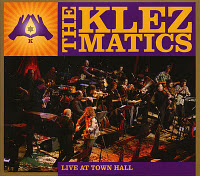
7. The Klezmatics – Live at Town Hall (Klezmatics Disc). The Klezmatics, one of the most creative and influential of contemporary klezmer bands, celebrate their 25th anniversary this year with this two-CD set recorded at their 20th anniversary concert in 2006 where the band was joined by a stellar bunch of 26 other guest singers and musicians to play some of the best music from their nine previous albums in what really was a once-in-a-lifetime extravaganza.


8. Bruce Murdoch – Sometimes I Wonder Why the World (Bruce Murdoch). These intimate and intense songs seem to flow like 13 movements in a suite. Mature love and human courage are the dominant themes. New songs from Bruce Murdoch are always to be treasured.


9. Ry Cooder – Pull Up Some Dust and Sit Down (Nonesuch). Drawing on traditional folk, blues, Mexican and rock motifs, and the influence of Woody Guthrie, Ry Cooder shows how vital contemporary topical songwriting can still be. While the anti-Bush pieces may already seem dated in the Obama era, even they speak to enduring themes of war, peace, honesty and accountability.

10. Carrie Elkin- Call It My Garden (Red House). A mature artist who has obviously developed her song-craft and performance styles, Carrie Elkin’s songs are layered in meaning and seem to reveal more each time I’ve listened to this compelling album.


---Mike Regenstreif

Monday, December 12, 2011

Sloan Wainwright – Upside Down & Under My Heart


SLOAN WAINWRIGHT
Upside Down & Under My Heart
Derby Disc Music

There were several poignant musical moments, almost two years ago, at the funeral service for beloved singer and songwriter, and old friend, Kate McGarrigle. Among the most profound, for me, came when Sloan Wainwright, Kate’s friend and ex-sister-in-law, sang “Today,” a beautiful song I’d never heard before.

It turned out to be a song that Sloan and Kate had co-written in 2009, sometime after Sloan’s husband, George McTavey, passed away following a long battle with leukaemia.

I told Sloan how moved I was by the song and she sent me an MP3 demo of “Today” recorded June 27, 2009 at Kate’s house in Montreal with Kate on piano, Chaim Tannenbaum on harmonica and mandolin and Joel Zifkin on viola. It was a song I listened to many times in the months that followed and which I’m pleased to report is included on Upside Down & Under My Heart, Sloan’s new album.

“Today” remains a profoundly moving song – a sad, quiet, dignified memorial to both George and Kate.

The sense of loss pervades several other songs including the haunting “I Wear the Ring,” a song to her late husband telling him that she wears his wedding ring and lets him know their children are all right.

Beyond loss and grief are songs like “I Can See Now” and “I Am Free” in which she affirms her continuing life and songs of hope like “Upside Down & Under My Heart,” which she sings as an expectant mother to a yet unborn child.

Musically, Sloan blends strains of folk, blues and pop into something of her own. Her greatest strength, perhaps, is her voice, a warm contralto marked by unique phrasing that brings each song to life, whether singing quietly and contemplatively or powerfully and forcefully.

--Mike Regenstreif

Bonnie Ste-Croix – Canadian Girl


BONNIE STE-CROIX
Canadian Girl
Bonnie Ste-Croix

I met singer-songwriter Bonnie Ste-Croix at the 2010 Ontario Council of Folk Festivals (OCFF) conference in Ottawa where she told me about an interesting project she had in the works. She was travelling to each of Canada’s 10 provinces and three territories and recording a song there with guest musicians from each locale. It was a highly ambitious project, to say the least, for an independent musician.

Bonnie is a thoroughly Canadian girl. She grew up in the Gaspé, has since lived in Montreal, Banff, Vancouver and, now, Halifax, and, as she sings in the album’s title track, regards the entire country – and its seasons and customs – as home. And, in her various collaborators from west to east and north to south, she’s found kindred musical spirits.

The album’s strongest tracks include the fore-mentioned “Canadian Girl,” recorded in Halifax with fiddler Natalie MacMaster and singer Laura Smith; “Front Porch Song,” recorded in Toronto with Stephen Fearing playing the Six String Nation Guitar that Jowi Taylor has been bringing around the country over the past five years and singers Kate Reid and Lynne Hanson, a catchy, slice-of-life-in-the-neighbourhood tune; “On Était Bien,” featuring the members of Dentdelion and Dale Boyle, which sounds like a Quebec folksong; “If I Could Sail,” recorded in St. John’s with The Once, a lament for a lover at sea; and “October Song,” a lovely tribute to the Canadian autumn featuring fiddler and harmony vocalist Shari Ulrich and fiddler Julia Graff (Shari’s daughter).

Each of the guest musicians brings something special to the songs they contributed to. And while many of the songs are not lyrically or stylistically specific to the places they were recorded, Bonnie has succeeded gloriously in creating a musical tribute to Canada and in recognizing there are excellent and creative musicians and singers in every part of the country.

--Mike Regenstreif

Tuesday, December 6, 2011

The Klezmatics -- Live at Town Hall

This review is from the December 12, 2011 issue of the Ottawa Jewish Bulletin.


The Klezmatics
Live At Town Hall
Klezmatics Disc

The New York City-based Klezmatics, without doubt one of the most creative and influential of contemporary klezmer bands, celebrate their 25th anniversary this year with the release of a two-CD set recorded at their exciting 20th anniversary concert in 2006. The current line-up of the band was joined by their former clarinetists Margot Leverett and David Kraukauer, and a stellar bunch of 24 other guest singers and musicians, to play some of the best music from their nine previous albums in what really was a once-in-a-lifetime extravaganza.

Live At Town Hall opens with the exuberant, joyfully over-the-top “Man in a Hat,” a Yiddish-English celebration of Manhattan, sailors, world travel and lust. Lead singer Lorin Sklamberg sings the double entendre lyrics with an elastic facility few singers in any genre of music can match. Meanwhile the band – virtuoso players all – wails in triple time.

From there we journey through a marvellous set that includes several extended medleys and suites.

Among the many highlights are four songs featuring special guest singers.

Joanne Borts and Sklamberg sing a duet on “Di Krenitse,” an Itzik Fefer poem set to music by Israeli singer Chava Alberstein. The arrangement draws on both klezmer and cabaret styles.

“Elijah Rock,” an African American spiritual which references biblical prophets Elijah, Moses and Ezekiel, features singer Joshua Nelson and an arrangement that could raise the roof on Preservation Hall in New Orleans.

Adrienne Cooper is featured on a powerful version of “I Ain’t Afraid,” a Holly Near song with added Yiddish lyrics by Cooper and Michael Wex, which the Klezmatics turned into a post-9/11 anthem extolling both defiance to terrorism and reconciliation of peoples.

And Susan McKeown, the superb Irish traditional singer, joins the band on “Gonna Get Through This World,” one of several songs drawn from the Klezmatics’ two albums of the Woody Guthrie Jewish-themed lyrics they set to music.

Other highlights include several other songs from the Guthrie project including “Holy Ground,” sung beautifully by Sklamberg with a choir of other Klezmatics and guests adding gorgeous harmonies, and just in time for right now, the celebratory “Hanuka Gelt.”

Along with Sklamberg, who plays accordion, guitar and piano in addition to his lead vocals, the core Klezmatics include Frank London on trumpet, horns, keyboards and percussion; violinist Lisa Gutkin; Matt Darriau on clarinet alto saxophone and kaval; Paul Morrissett on bass and tsimbl; and drummers David Licht and Richie Barshay. They are not just one of the best bands in klezmer music, they’re one of the best bands in any kind of music.

--Mike Regenstreif