Saturday, January 29, 2011

Ottawa Folk Festival update #2


More on the Ottawa Folk Festival.

As I mentioned on January 18, Ottawa Bluesfest’s Mark Monahan and his team “obviously know how to put on the big concerts that have come to dominate the evening concerts at folk festivals. I remain optimistic that he’ll maintain and develop the creative daytime workshop programming that I believe is the heart and soul of great folk festivals.”

Well, I’m happy to report that he’s assigned curatorship of the daytime workshop programming to the Ottawa Folklore Centre. That is the best news I’ve heard about the festival in a very long time. I think this is a great move that will ensure that the 2011 Ottawa Folk Festival’s daytime programming will continue to be the heart and soul of the festival.

Ottawa Folklore Centre owner Arthur McGregor has been involved in the folk music scene for a very long time and he has a deep understanding of the kind of programming I’ve been referring to. He’s already talked about continuing the kind of participatory workshops the Folklore Centre has coordinated in past years for the festival (excellent move) and depending on the selection of artists he’ll have to work with, I think there is the potential for this to be a great festival.

Pictured: Dan Frechette, Riley Baugus, Dirk Powell, Courtney Granger, Martha Scanlan, Robert Michaels &  bass player, and Mike Regenstreif at the Ottawa Folk Festival (2006).
  
--Mike Regenstreif

Thursday, January 27, 2011

Sing Out! Magazine – November/December ‘10/January ‘11

My copy of the latest issue of Sing Out! Magazine – November/December ‘10/January ’11 – arrived this week. The cover story is about South African singer-songwriter Johnny Clegg.

As usual, this issue of Sing Out! has a bunch of my CD reviews including:

Trevor Alguire- Now Before Us
Asleep at the Wheel & Leon Rausch- It’s a Good Day!
Jay Aymar- Halfway Home
Allison Brown- Viper at the Virgin’s Feet
Andy Cohen- Built Right Here on the Ground
Les Copeland- Don’t Let the Devil In
Ramblin’ Jack Elliott- At Lansdowne Studios, London
Finest Kind- For Honour and for Gain
Frazey Ford- Obadiah
Michael Hurwitz- Chrome on the Range
Chris Kokesh- October Valentine
Jimmy LaFave- Favorites 1992-2001
Terence Martin- The Last Black and White TV
Rain Perry- Internal Combustion
Oliver Schroer & the Stewed Tomatoes- Freedom Row
Bow Thayer- Shooting Arrows at the Moon
Craig Werth- The Spokes Man.

I’m now at work on a bunch of CD and book reviews for the next issue of Sing Out! and will resume posting more reviews here in early-February when those are done.

--Mike Regenstreif

Monday, January 24, 2011

Tuesday, January 18, 2011

Update on Ottawa Folk Festival

Lynn Saxberg of the Ottawa Citizen has filed a report on the latest developments in the Ottawa Bluesfest takeover of the Ottawa Folk Festival.

Folk festival artistic director Dylan Griffith is gone (after just one year), the folk festival office has moved into Bluesfest’s digs, the folk festival board is now dominated by Bluesfest board members and the booking is being done by Bluesfest director Mark Monahan. The folk festival dates have been moved to August 26 to 28 and it’s almost certain that the location will be moved to a more central location than Britannia Park.

Monahan and his team obviously know how to put on the big concerts that have come to dominate the evening concerts at folk festivals. I remain optimistic that he’ll maintain and develop the creative daytime workshop programming that I believe is the heart and soul of great folk festivals.

Pictured: Mike Regenstreif, Nora Guthrie, Kris Kristofferson and Jimmy LaFave talking about Woody Guthrie at the 2007 Ottawa Folk Festival.

--Mike Regenstreif

Wednesday, December 15, 2010

Top 10 for 2010

Here are my picks for the Top 10 folk-rooted or folk-branched albums of 2010. I started with the list of 408 albums that landed on my desk and over the past year and narrowed it down to a short list of about 35 worthy contenders. I’ve been over the list four times over the past week and have come up with four similar, but not identical, Top 10 lists. I decided today’s list will be the final one. The order might have been different, and there are half a dozen or so other albums that may have been included had one of the other days’ lists had been the final choice.

1. Natalie Merchant- Leave Your Sleep (Nonesuch). A stunning two-CD set of 26 songs that Merchant set to music using the words of various 19thth and 20th century poets. The settings, using a large cast of revolving back-up musicians, variously range from Celtic to Klezmer, from Appalachian folk to blues and rock. Click here for my full-length review.

2. Tom Russell- Cowboy’d All to Hell (Frontera). The first eight songs on this under-the-radar release are re-mastered versions of Tom’s original songs from Cowboy Real (including duets with Ian Tyson on “Navajo Rug” and “Gallo del Cielo”), the first of his great cowboy song collections. The other nine songs are newly-recorded duo versions – with guitarist Thad Beckman – of eight cowboy songs originally recorded on other albums and one new song. These are vivid, cinematic portraits of the old and new west by a master singer-songwriter.

3. Bob Dylan- The Witmark Demos 1962-1964: The Bootleg Series, Vol. 9 (Columbia/Legacy). These publishing demos, all solo performances recorded when Dylan was in his early-20s, and including Dylan’s versions of 15 songs he’s never officially released before, are well- worth listening to for clues to the development of the most essential of all 20th century songwriters.Click here for my full-length review.

4. Ron Hynes- Stealing Genius (Borealis). Ron calls the album Stealing Genius because most of the songs are inspired by specific works written by poets and novelists, mostly from Newfoundland along with one American. Stealing Genius represents the finest set of original songwriting to be released in Canada this year. Click here for my full-length review.

5. Mary Chapin Carpenter- The Age of Miracles (Zoë/Rounder). Most of these songs form an intimate conversation between Carpenter and the listener. It is, perhaps, her finest albums ever. Click here for my full-length review.

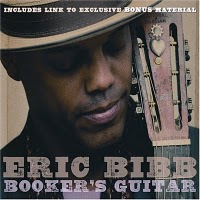
6. Eric Bibb- Booker’s Guitar (Telarc). Eric’s magnificent singing, his deft guitar work (along with Grant Dermody's equally great harmonica playing) and Eric's original songs can’t help but make anyone feel better about life. Click here for my full-length review.

7. The Once- The Once (Borealis). The Once, a trio from Newfoundland that plays a mixture of traditional material and first-rate contemporary songs is my choice for new discovery of the year. Their debut album includes some spine-tingling a cappella arrangements as well as some superb instrumental work. Click here for my full-length review.

8. Johnny Cash- American VI: Ain’t No Grave (American/Lost Highway). Recorded during the year before his 2003 passing, the final set in Cash’s series of essential “American” albums, these songs are an intimate, poignant farewell from a great artist. Click here for my full-length review.

9. Catherine Russell- Inside This Heart of Mine (World Village). On her third album, Catherine Russell’s relaxed and confident alto pulls listeners right into the mostly classic jazz and blues tunes anchored by inventive arrangements steeped in various shades and styles of blues, jazz, swing and folk music. Click here for my full-length review.

10. Various artists- Jug Band Extravaganza (Folk Era). An infectious live concert recording that features various combinations of Jim Kweskin, Geoff Muldaur, John Sebastian, David Grisman, Maria Muldaur and the Barbecue Orchestra on terrific solo, duo, trio and full group performances of jug band, blues, jazz and old-time country classics. See the new issue of Sing Out! magazine for my full-length review.

---Mike Regenstreif

Monday, December 13, 2010

Michael Wex -- The Frumkiss Family Business

My book review of The Frumkiss Family Business by Michael Wex from today's issue of the Ottawa Jewish Bulletin is now online at michaelwex.com.

--Mike Regenstreif

Adam Stotland -- Maagal

My review of Maagal by Adam Stotland for The Forward is now available on their Arty Semite  blog.

--Mike Regenstreif

Monday, December 6, 2010

Kate & Anna McGarrigle -- Oddities

KATE & ANNA McGARRIGLE
Oddities
Querbeservice
mcgarrigles.com

It was always wonderful, over the years, to have new music from Kate and Anna McGarrigle. Now, less than a year after Kate’s untimely passing, it’s a particularly wonderful, albeit bittersweet, to have these new recordings to savour.

Well, not exactly new. Oddities is a collection of a dozen songs that Kate and Anna recorded for various projects, and in various circumstances, between 1973 and 1990 but never previously released, or never released in the versions included on this new CD. It’s a compilation that Anna says she and Kate had long talked about putting together but kept putting off for another year. Many of the tracks are alternate versions of songs that have been heard on other projects. And even if almost all the songs are familiar, they sound fresh and new in these previously unreleased versions.

Kate and Anna grew up singing Stephen Foster songs – “These were songs that my daddy taught me,” sang Kate in “The Work Song” – and Oddities begins with a set of four of Foster’s 19th century parlour songs.

The first two Foster songs, the sad lament, “Was My Brother in the Battle,” and the hopeful anthem, “Better Times are Coming,” both written in 1862, are alternate versions of songs recorded by Kate and Anna for Songs of the Civil War, a companion CD of songs to the Civil War documentary series that Ken Burns did for PBS about 20 years ago.

The third Foster song, “Gentle Annie,” written in 1856, was previously released by Kate and Anna in collaboration with Linda Ronstadt on The McGarrigle Hour. For as long as I knew her, which was close to 40 years, “Gentle Annie” was always one of my favourite songs to hear Kate sing. With apologies to Bob Dylan, who wrote “that nobody can sing the blues like Blind Willie McTell,” nobody could sing “Gentle Annie” like Kate McGarrigle. Utah Phillips, another old friend now gone, was inspired to write his song, “Nevada Jane” after hearing Kate sing “Gentle Annie.” Anna’s harmonies on the track are, of course, sublime.

“Ah May the Red Rose,” the final Foster song, dates from 1850 and is a short, sad, beautiful song sung by Anna (with Kate supplying the sublime harmonies) that laments death and mourning.

The Foster songs are followed by two of the late Wade Hemsworth classics including, finally on CD, a version of “The Log Driver’s Waltz,” a song that the McGarrigles began singing back in the 1960s when they were part of the Mountain City Four. The song, of course, is best known from John Weldon’s animated short film featuring a different arrangement of the song (Kate’s voice begins this rendition while Anna’s begins the version in John’s film). “The Log Driver’s Waltz,” is another song that’s been one of my favourite McGarrigle performance pieces going back to the first concerts I produced for them at the Golem in Montreal in 1974 and 1975.

The other of Wade’s songs is a choral arrangement of “My Mother is the Ocean Sea,” an other-worldly sounding song that Kate and Anna also sang on a CBC broadcast recording many years ago. They also include a version of “As Fast As My Feet,” co-written by Anna and Chaim Tannenbaum, which was also on that CBC recording. It’s a zippy, infectious number that, in an era where a hook, a great melody and catchy arrangement meant something, could have been a hit single.

There are a couple of French songs in the set beginning with a live version of the traditional “A La Claire Fontaine” that was recorded at one of the Pollack Hall concerts with Kate and Anna that I produced in 1976.

The other French song is a Cajun number, “Parlez-Nous À Boire,” adapted from the repertoire of Louisiana’s legendary Balfa Brothers. It’s one of the rockingest numbers Kate and Anna have done.

“Lullaby for a Doll,” written by Kate, is a lovely song about childhood innocence, a version of which was included on ‘Til Their Eyes Shine, a 1992 collection of lullabies by various artists.

“Louis the Cat,” written by Anna and Audrey Bean, is a lament for a lost cat and is a living room demo recorded in 1973. I can’t say that I have any memory of the song from back in the day, but it’s still nice to hear after all these years.

Oddities ends with a version of “You Tell Me That I’m Falling Down,” a song written by Anna and Carol Holland that Linda Ronstadt recorded in 1975. Listening to this highly-arranged version, I think this track was probably either an album demo or outtake that didn’t get used. I remember Anna and Kate singing it at the Golem in 1975, and occasionally over the years, and always hoped they’d put it on an album; finally, here it is for us.

Oddities takes its place in a discography in which almost every album Kate and Anna recorded must be regarded as an essential recording. These are songs to warm our hearts as we head into the cold winter months.

--Mike Regenstreif

Upcoming Montreal Concerts

Our friends at Hello Darlin’ Productions have a couple of notable concerts coming up soon in Montreal.

On Saturday, December 11, they have a double bill featuring Ken Whiteley and Lake of Stew.

Then on Monday, December 13, it’s the Wintergreen Concert Series Christmas concert with the Good Lovelies.

Both shows are at 8:00 pm at Petit Campus, 57 Prince Arthur East. For info or reservations, call 514-524-9225.

Here are links to my reviews of the latest albums by Ken Whiteley and Lake of Stew and the Christmas album by the Good Lovelies.

--Mike Regenstreif

Wednesday, December 1, 2010

Grant Dermody -- Lay Down My Burden

GRANT DERMODY
Lay Down My Burden
Grant Dermody
grantdermody.com

I was quite impressed, in 2003, with the debut album by Grant Dermody, a Seattle-based singer and harmonica player. As I wrote in Sing Out! magazine, “Despite the diversity of the collaborations, the tastefulness of Dermody’s harp, his relaxed vocals and a good choice of material, make for a nicely cohesive album...I’m looking forward to hearing more of Dermody’s playing on future projects.”

Earlier this year, in a review of Eric Bibb’s great album, Booker’s Guitar, I said, “the only other musician is harmonica master Grant Dermody. Grant’s playing is always creative – I especially like his use of chromatic harmonica on “Flood Waters” – and complements Eric’s singing and playing beautifully. Eric and Grant’s playing together is some of the finest guitar-harmonica duo work since Sonny Terry and Brownie McGhee were in their prime.”

Lay Down My Burden, Grant’s second solo album, is also a fine effort in which he and various collaborators offer fine examples of various blues and gospel styles and also occasionally delve into old-timey country music.

The album opens with one of my favourite tracks on the CD, a sweet version of the Reverend Gary Davis spiritual, “I’ll Be Alright,” which kind of picks up where Grant and Eric left off on Booker’s Guitar, except that it’s Grant singing the lead vocal on the gentle, optimistic song along with Eric’s sublime fingerpicking and some equally sublime harmonica playing by Grant.

From there the album moves on through a series of other collaborations ranging from full band settings to unique combinations with one or two other musicians to several tracks in which Grant backs up older bluesmen John Dee Holeman, Louisiana Red and the late John Cephas.

A couple of the most interesting tracks are harmonica duets. “Rain Crow Bill,” sees Grant and Mark Graham trading harp licks and whoops in the tradition of Sonny Terry (in fact, I have a recording of “Rain Crow Bill” from the 1940s in which Sonny and Woody Guthrie are trading harp licks and whoops). On “Twelve Gates to the City,” the second harmonica is ably played by Joe Filisko.

A few of the other highlights include “David’s Cow,” a playful guitar-fiddle-harmonica hoedown; a sad version of Dirk Powell’s “Waterbound”; and a beautiful a cappella arrangement of Stephen Foster’s “Hard Times Come Again No More” in four-part harmony.

Most of the songs on this album – whether drawn from the traditional repertoire or from Grant’s own song bag – feel timeless.

--Mike Regenstreif

Thursday, November 25, 2010

Clare Burson -- Silver and Ash

CLARE BURSON
Silver and Ash
Rounder Records
clareburson.wordpress.com

(This review is from the November 29, 2010 issue of the Ottawa Jewish Bulletin.)

Clare Burson addresses her grandmother in “The Only Way,” the first of 10 original songs on Silver and Ash. “Someone said you left there just in time,” she sings. It was, quite literally, just in time when Burson’s grandmother escaped Nazi Germany for the United States on the morning of Kristallnacht in 1938.

With a grant from Six Points Fellowship, an organization that supports artists exploring Jewish themes in their work, the New York-based singer-songwriter wrote these folk-like songs by imagining her grandmother’s life in Germany during the trying years preceding the Holocaust.

Most of the songs are impressionistic with few explicit references. It’s almost like each song offers an interpretation of a faded photograph (in fact, there are several faded photos included in the CD booklet). Images of a small baby pervade one song while another offers sketches of people in – seemingly sudden – transit. In “Everything’s Gone,” Burson remembers her great-grandparents – soon to be lost in the Holocaust – through the eyes of her grandmother about to “take the last train from the last train station.”

Burson spent time in Europe researching these songs and addresses her grandmother again in “Magpies,” the album’s poignant finale, as if it’s a letter from Germany. “Sometimes I think of how life must have been for you here, what life could have been for you here.”

--Mike Regenstreif

Wednesday, November 17, 2010

Steel Rail rides again; Bill Garrett & Sue Lothrop

Steel Rail concerts have been too few and too far between in the years since guitarist and songwriter Dave Clarke left Montreal for the milder climes of Victoria, BC. Soon, though, Dave will be back in Steel Rail action with bass player and singer Ellen Shizgal and singer-guitarist Todd Gorr for concerts in Lennoxville and Montreal. They’re promising some new songs and lots of the old favourites in their patented folk-meets-bluegrass style.

The concerts are both double bills with the most excellent duo of Bill Garrett & Sue Lothrop.

The Lennoxville concert is Friday November  26, 8:00 pm, at the Church Street Cafe, 6 Church Street in Lennoxville. Call 819-875-5696.

The Montreal concert, part of the Wintergreen Concert Series, is Saturday November 27, 8:00 pm, at Club Lambi, 4465 St. Laurent in Montreal. Call 514-524-9225.

Here are my Montreal Gazette reviews of the most recent CDs by Steel Rail and Bill Garrett & Sue Lothrop.

STEEL RAIL
River Song
Crossties

This third album by Steel Rail, rooted almost equally in country, bluegrass and folk music, is their best effort yet. The trio’s ensemble sound features vocalist and rhythm guitarist Tod Gorr, who has one of the most naturally country voices this side of George Jones, lead guitarist Dave Clarke, one of the most fluid acoustic pickers in the country, and bassist Ellen Shizgal, who provides the band’s heartbeat, some gorgeous harmonies and two lead vocals. Steel Rail’s secret weapon, though, is the fine craftsmanship of their songwriting. Songs of love and loss mix with pieces that nostalgically recall Belmont Park or that conjure images of the sailor’s church in Old Montreal, the Quebec countryside, beautiful prairie skies and the tough streets of downtown Winnipeg. ****

BILL GARRETT & SUE LOTHROP
Red Shoes
Borealis

On their duo debut, veteran Montreal singer-guitarists Bill Garrett and Sue Lothrop have crafted a fine blend of country, Cajun and folk-rooted material. One of the most affecting songs is the beautiful title track written about Lothrop’s mother at the end of her life. Another is "That’s How the Summer Slips Away," a poetic and wistful piece written by Lucinda Chodan and Dave Clarke. Two topical songs, Shelley Posen’s "No More Fish," and Terry Tufts’s "Never No More," provide moving commentary on contemporary issues, while "Leaving Louisiana," Rodney Crowell’s Cajun stomper, is the album’s most exciting tune. Garrett and Lothrop share the lead and harmony vocals and are well served by a supporting cast that includes Clarke and Tufts, fiddler Don Reed and clarinetist Vern Dorge. ****

--Mike Regenstreif

Friday, November 12, 2010

Ottawa Bluesfest partners with Ottawa Folk Festival

The Ottawa Citizen has a front page story today reporting that the Ottawa Folk Festival has been bailed out and taken over by the Ottawa Bluesfest.

Reading the article, I surmise that the folk festival will likely move from Britannia Park and have more commercially viable headliners. It remains to be seen what that means for the rest of the artistic direction, artistic legacy and traditions of the festival (or the staffing and volunteer continuity). I guess we'll see in the coming months.

Update (Saturday, November 13): With thanks to Brian Silcoff and his OFME e-mail list, here is the press release that was issued Thursday by the Ottawa Folk Festival. As Ottawa Folk Festival board member Bob LeDrew notes in his comment,  the new arrangement is a partnership rather than a takeover. It certainly would have been helpful for me -- as a member of both the media and the Ottawa Folk Festival community -- to have received the press release on Thursday; or, at the least, to have been able to find it on the Ottawa Folk Festival  or Ottawa Bluesfest websites, both of which I checked after the news broke in yesterday's Citizen.

Pictured: Mike Regenstreif and Ramblin' Jack Elliott at the 2010 Ottawa Folk Festival (August 14, 2010)

--Mike Regenstreif

Thursday, November 11, 2010

Ron Hynes -- Stealing Genius

RON HYNES
Stealing Genius
Borealis Records
hynesite.org

Ron Hynes, the pride of St. John’s, Newfoundland and Labrador, is, without question, one of Canada’s greatest singer-songwriters – a writer whose genius can be found in decades worth of great songs.

Ron calls his new album Stealing Genius because most of its songs are inspired by specific works written by several poets and novelists, mostly from Newfoundland along with one American. In some songs, Ron actually gives the inspiring writer a co-writing credit.

The album opens with “Blood and Bones,” a song inspired by What They Wanted, a novel about a family’s resettlement by Donna Morrissey. It’s a familiar story that Ron sings about: a family forced to leave their home for someplace new because the work is no longer there. In this case, presumably, it’s the local fishery that’s no longer viable as “the ocean died like late night embers in the stove.” Ron’s lyrics and his singing seem to combine poignancy with regret and a hint of anger.

Morrissey’s book, as well as Michael Crummy’s The Wreckage, inspired “My Father’s Ghost,” a song that is both a remembrance from long ago of discovering a father’s death and a brilliantly drawn contemporary portrait of a lonely life in sea coast village.

In “House,” inspired by Stan Dragland’s Stormy Weather: Foursomes, Ron sings about an old house as the shell for the lost love that no longer lives within its walls.

“I Love You More Than God” and “Love and Hunger” are two stunning love songs based on poems by Des Walsh and which are reminiscent of the great romantic poets.

One of my favourite songs in the set is "30 For 60," inspired by a poem by Al Pittman, that's a powerful portrait of a man, no longer young, damning his regrets.

One song that takes its inspiration from an American book is “Judgement,” a song based on Ron Hansen’s The Assassination of Jesse James By The Coward Robert Ford. Ron sings from the perspective of Ford trying to rationalize his act.

As a singer, Ron knows exactly how to communicate the essence of the songs to his listeners and the arrangements, featuring such musicians as Paul Mills (who also produced the album), Alec Fraser, Tom Leighton and Burke Carroll, frame the songs almost perfectly.

Stealing Genius represents the finest set of original songwriting to be released in Canada this year.

--Mike Regenstreif

Sunday, November 7, 2010

Lucy Wainwright Roche -- Lucy

LUCY WAINWRIGHT ROCHE
Lucy
Lucy Wainwright Roche
lucywainwrightroche.com

Being the daughter, niece, and half-sister of a bunch of accomplished singer-songwriters, Lucy Wainwright Roche probably had a lot to prove when she decided to give up her teaching career and go into the family business. After all, her parents are Suzzy Roche of the Roches and Loudon Wainwright III. Her aunts are Maggie and Terre Roche, also of the Roches, and Sloan Wainwright, and her half-siblings are Rufus and Martha Wainwright. That’s an awful lot of familial talent to live up to. Well, first on a couple of eight-song EPs, and now on Lucy, her first full-length release, Lucy has more than proven herself worthy of a seat at a Wainwright and/or Roche family round-robin session.

Although her songs have their own distinctiveness, Lucy reminds me more of her mother’s music than her father’s. The melodies, the sometimes quirky lyrics, the way she harmonizes – sometimes with herself, or with back-up vocalists like her father, or the Roches, or the Indigo Girls, or Girlyman – have a similar kind of appeal to the Roches. Take “Once In,” the lead-off song, for example. The lines seem to be disjointed, but they come together as images of time on the road leading back to home. The travelling life, represented by the blurry, lonely, highway scene depicted on the CD cover, is a recurring theme in many of Lucy’s songs.

My favourite songs in the set include “Accident and Emergency,” an observational piece about a night spent in a British hospital’s emergency room, and “Statesville,” which uses images of a torn down high school in that North Carolina town, and the hanging of Tom Dula – immortalized in the folksong “Tom Dooley,” which happened in Statesville in 1868 – as metaphors for a broken relationship.

After 10 of her own songs, Lucy ends the album with a pair of interesting covers. With Paul Simon’s “America,” featuring the patented Roches harmonies, Lucy beautifully captures the same kind of innocence, alienation and anomie that Simon and Garfunkel brought to their recording more 40 years ago. Then, with Elliot Smith’s “Say Yes,” Lucy and duet partner Ira Glass, express the seemingly contradictory thoughts of someone who’s broken up, but apparently still linked in love, with his ex-girlfriend.

--Mike Regenstreif