
Here are my picks for the Top 16
folk-rooted or folk-branched albums of 2016. As in past years, I started with
the list of hundreds of albums that landed on my desk over the past year and
narrowed it down to a short list of about 30. I’ve been over the short list
several times over the past couple of weeks and came up with several similar –
not identical – Top 16 lists. As I’m about to take a break from blogging until
January, today’s list is the final one. The order might have been slightly
different, and there are several other worthy albums that might have been
included, had one of the other lists represented the final choice.

1. Leonard Cohen – You Want It Darker (Columbia). Released just a few weeks before Leonard Cohen died earlier this month
at age 82. You Want It Darker is the
third in a series of remarkable and deep late-career albums that followed in
the wake of Leonard’s equally remarkable years of late-career tours and live
albums. This is a masterwork filled with conversational and hypnotically
mesmerizing song-poems layered with meaning that both reveal more every time
they are heard and suggest new avenues of meaning and interpretation rendering
them ever mysterious.

2. Chaim Tannenbaum – Chaim Tannenbaum (StorySound Records). I’ve known Chaim Tannenbaum since the early-1970s and throughout that time he remained my
favorite singer who had never made an album of his own. Finally, at age of 68,
and retired from his career as a philosophy professor at Dawson College, he has
finally recorded this compelling debut album. Drawing on traditional and
contemporary sources – including several superbly crafted original songs –
there is a theme of exile that runs through most, perhaps all, of these songs
in some way or another. Chaim won the 2016 Canadian Folk Music Award for
traditional singer of the year for Chaim
Tannenbaum

3. Jim Kweskin & Geoff Muldaur – Penny’s
Farm (Kingswood Records). Well over 50 years after Jim Kweskin & the Jug Band got
together and 40-something years since they broke up, Jim Kweskin and band stalwart Geoff
Muldaur reunited for the sublime Penny’s
Farm, an eclectic collection of folk-rooted and folk-branched songs played
by a couple of masters whose interpretive skills have aged like fine whiskey.
Jim and Geoff each take the lead vocal on about half the tracks.

4. Tom Russell – The Tom Russell Anthology 2: Gunpowder Sunsets (Frontera Records). The
second volume of Tom Russell’s Anthology
is a generous 19-song, 79-minute set that includes several early songs, several
previously-unreleased tracks, and many that were first released in the years
since the first volume. The collection is a great introduction to Tom Russell for neophytes and it has enough previously-unheard material – and a fresh-sounding
sequencing – that makes it a great listen for longtime aficionados like me of
the artist I’ve often called the best songwriter of my generation.

5. The Del McCoury Band – Del and Woody (McCoury Music). Bluegrass legend Del McCoury is another of Nora
Guthrie’s great choices for an artist to set some of Woody Guthrie’s previously
unknown lyrics to music. On Del and Woody,
he adds a dozen “new” songs to the Guthrie canon while creating one of the best
bluegrass albums I’ve heard in years. The lyrics are all Woody’s set to
melodies by Del. He receives strong support throughout the CD from his band –
including two of Del’s sons – who are, perhaps, the greatest traditional
bluegrass band currently active.

6. Maia Dunn – Gatherings (Distant Whisper Music). Taking her cue from Pete Seeger, who said “The key to the
future of the world is finding the optimistic stories and letting them be known,” Maria Dunn has done just that on Gatherings, giving us inspiring songs mostly
about the lives of real people making a difference in the world. Maria is one
of Canada’s finest and most perceptive singer-songwriters and these songs are
important additions to the Canadian folk music canon.

7. Leyla McCalla – A Day for the Hunter, a Day for the Prey (Jazz Village). Three
years ago, the last time I saw the Carolina
Chocolate Drops, cellist and singer Leyla
McCalla was part of that wonderful ensemble. She has since emerged as a solo
artist whose work is captivating, compelling and utterly original. A Day for the Hunter, a Day for the Prey,
her second album, includes several of her own songs, several by others and
several traditional pieces variously sung in English, Cajun French and Haitian
Creole.

8. David Francey – Empty Train (Laker
Music). On Empty Train, David Francey offers 11 of his
insightful, mostly timeless songs and a fine version of “False Knight,” the
traditional folk song. Perhaps the most moving songs are “Crucible,” written
about his father and uncle’s service in the Royal Navy during the Second World
War, and “Hospital” about visiting his father in the hospital. David won 2016 Canadian
Folk Music Awards for solo artist of the year and contemporary album of the
year for Empty Train.

9. Anne Hills and Jay Ansill – Fragile Gifts (Hand & Heart Music). On the lovely Fragile Gifts,
Jay Ansill has created classical
arrangements – ranging from string quartet to full chamber orchestra – to
accompany Anne Hills’ vocals on a
selection of material that includes songs by Anne, songs co-written by Anne and
Jay, and poetry settings by Jay. There is also an instrumental suite composed
by Jay based on Spanish traditional music, and a lovely version of “The
Scarecrow” by Lal and Mike Waterson.

10. Orit Shimoni – Soft Like Snow (MW Music). The quiet, sad,
poetic, thought-provoking songs on Orit Shimoni’s Soft Like Snow speak of love, loss of love, memory
and the futility of war. Sometimes reminiscent of Leonard Cohen – one song, “Playing Chelsea Hotel” is a direct nod
to Leonard – such pieces as “Soft Like Snow,” “Room to Myself” and “Fool” show
Orit to be a deeply perceptive songwriter.

11. Claire Lynch – North by South (Compass Records). Claire Lynch, one of the
finest of contemporary bluegrass singers, has long also
found inspiration in contemporary folk-rooted styles, singers and songwriters. On
North by South, she specifically
finds inspiration in Canadian songwriters – nine of the 10 songs were written
by Canadians (the 10th is one of Claire’s own songs). Highlights include the haunting
version of Lynn Miles’ “Black
Flowers,” whose narrator is a young mother whose husband was recently killed in
a coal mine accident, as well as songs by Old
Man Luedecke and Willie P. Bennett.
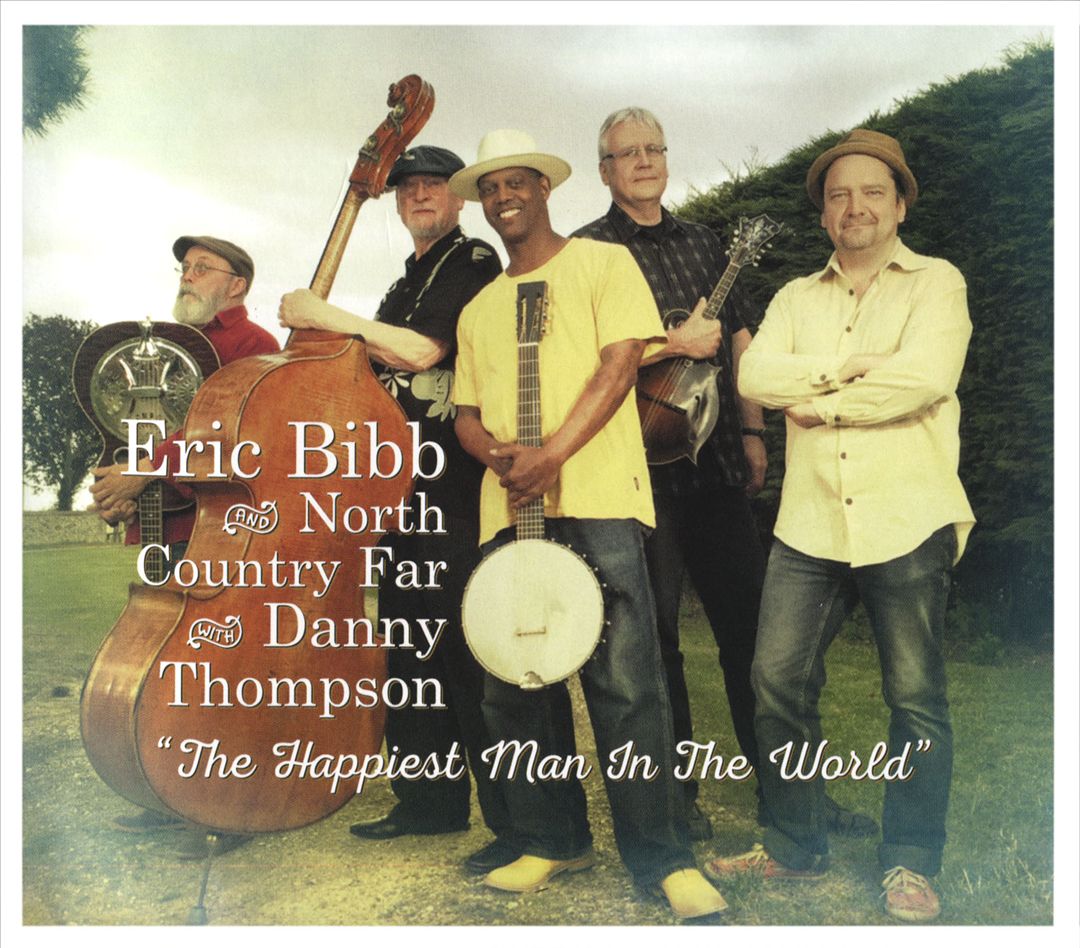
12. Eric Bibb & North Country Fair
with Danny Thompson
– The Happiest Man in the World (Stony
Plain Records). The prolific Eric Bibb keeps
his prolific stream of releases sounding fresh by often working with different
combinations of collaborators. This time around, Eric is joined by North Country Far – a trio of Finnish musicians – and legendary British bassist Danny Thompson who provide always
tasteful and never obtrusive back-up for Eric’s own inspired singing and guitar
and banjo playing. Despite the fact that Eric has recorded so many albums in
recent years, each of his recordings is a treat and this is no exception.

13. Bob Dylan – The Real Royal Albert Hall 1966 Concert (Columbia/Legacy). Drawn
from the 36-CD box set documenting virtually every show on Bob Dylan’s 1966 tour of Australia and Europe, this standalone 2-CD
set includes a stunning seven-song acoustic set that is solo Dylan at his best
and a fierce electric set with The Hawks (later to be known as The Band) that
rocks hard. If this album is not essential, it’s only because the set list is
identical to the Manchester Free Trade Hall concert some days earlier released
in 1998 as The
Bootleg Series Vol. 4: Bob Dylan Live 1966, The “Royal Albert Hall” Concert.

14. Corin
Raymond – Hobo
Jungle Fever Dreams (Local Rascal Records). Corin Raymond is a singer-songwriter whose work on Hobo Jungle Fever Dreams engages the
listener; the words and melodies combining to draw listeners into the stories
he’s telling – and whether the stories are autobiographical or about other
people, real or fictional, it’s the story that matters with the lyrics, music,
arrangement and delivery all in service to the story. Corin makes you care
about the people in these songs. David
Gillis won the 2016 Canadian Folk Music Award for producer of the year for
his work on Hobo Jungle Fever Dreams.
Click here for my full-length review of Hobo Jungle Fever Dreams.


15. Sally Rogers & Claudia Schmidt – We are Welcomed (Pragmavision). On We are Welcomed, Sally Rogers and Claudia Schmidt have combined their always lovely and frequently
powerful voices together in glorious harmony. While both have maintained solo
careers over the years, this is their fourth collaborative album together since
1981. Each contributes several original songs and they also do several well-chosen
covers, including a magnificent version of Sandy
Denny’s autumnal masterpiece “Who Knows Where the Time Goes.”

16. Jenny Whiteley – The
Original Jenny Whiteley (Black Hen Music). Jenny Whiteley’s fifth
solo album, The Original Jenny Whiteley,
is a homage to her dad, Chris Whiteley,
a member of Toronto’s legendary Original
Sloth Band. Whether on songs like “Stealin’, Stealin’” or “Things are Coming
My Way,” which were on Sloth Band LPs back in the ‘70s, or on other vintage
songs, or even her own original material,
they were all, she notes, “influenced in some way by his music.” The Original Jenny Whiteley is a
delightful 11-song romp.
I will be featuring songs from each of these albums when I host the Saturday Morning program on CKCU on Saturday, January 7, 7-10 am. (The program will also be available 24/7 for on-demand streaming after it airs.)
Find me on Twitter. twitter.com/@mikeregenstreif
And on Facebook. facebook.com/mikeregenstreif
--Mike Regenstreif


